|
||||||||||||||||||||||||||||||||||||||||||
|
||||||||||||||||||||||||||||||||||||||||||
Showing posts with label AFRICAN AMERICANS. Show all posts
Showing posts with label AFRICAN AMERICANS. Show all posts
Friday, August 7, 2015
YORUBA NEWSPAPERS!---ALAROYE-"OONI,OBA SIJUWADE LO,KO DAGBERE FENIKAN"--FROM ALAROYE NEWSPAPER,NIGERIA


Tuesday, December 27, 2011
YORUBA LANGUAGE IS DYING! -SAVE IT BY BUYING YORUBA PUBLICATIONS LIKE ALAROYE,TENI-N-TENI MAGAZINE, EVEN IF YOU ARE IN CUBA,JAMAICA,OYOTUNJI,AMERIKKKA,BRAZIL CAUSE THE CULTURE WILL DIE NEXT!- READ HOW ALAO ADEDAYO STRUGGLED TO PUBLISH ALAROYE AND SEND FOR A SUBSCRIPTION TO SUPPORT YORUBA LANGUAGE! -LEARN TO SPEAK IT,SET UP YORUBA SCHOOLS FOR YOUR CHILDREN...
FROM yeyeolade.wordpress.com
 I stumbled four times to make Alaroye a success story – Alao Adedayo
July 8, 2011
Musa Alao Adedayo, a.k.a Agbedegbeyo, is the Publisher/Chief Executive Officer, World Information Agents Limited, the publishing company of the popular Yoruba newspaper, ALAROYE. He spoke to BASHIR ADEFAKA about himself and how he stumbled four times to get it right with the vernacular paper that has today become a success story in the newspaper industry in Nigeria. Excerpt
How did you start out in life?
I am a Muslim but I am not a biased person because God Himself never loved a biased person. But those who know me from the beginning used to call me Alao Agbedegbeyo. When I talk of people who know me from the beginning, they are people from the 70s, early 80s and so on.
I came from Abeokuta to Lagos in 1980 doing Ewi (lyrics) artist. In those days as an Ewi person, you must be attached to a particular musician and I was with Dele Abiodun, who was like my master. Ewi was like side-attraction at a show and it would come on stage while the musician and his band members were taking a rest.
I had also participated in some dramas through the likes of Jide Kosoko, Ishola Ogunsola, (Dr. I. Show Pepper) and Adebayo Salami (Oga Bello). It was because of the Ewi that I used to present in those days that Jide Kosoko would always come to Dele Abiodun’s shows. He would say to me, “Alao, we are having an outing somewhere and I want you to perform your Ewi there,” and I would say no problem.
How did Ewi correlated with the broadcaster that you were?
By and large as God would have it, through that channel, as I have mentioned before, I became a broadcaster. Sometime in 1979, Radio Lagos started a programme called, Kebuyeri, which was mainly for the Awada Kerikeri group that was then run by Adebayo Salami popularly called Oga Bello. We went to a show at Ebute Metta and Adebayo Salami and his group members had also come to that show.
It was there he saw me and said, “Ah, Alao! Radio Lagos has just given us a programme and we want you to be in it” and I said no problem. We didn’t even discuss money because what was more important to us at that time was the job. That was how we started the programme and it became overwhelmingly popular turning me into a celebrity.
Behind that programme, a plan was going on by the management of Radio Lagos and the producer of the programme, Adebayo Tijani, communicated to me that management was talking about me and that was how I became a newscaster with Radio Lagos reading Yoruba news at that time.
I left Radio Lagos in 1981, which was a real year of politicking in the country. Then, Radio Nigeria Ikeja which was established within that time was located in Ikoyi and in fact when we were there, we were always abusing and calling them, “Agberekusu f’ohun Ikeja” that is, people who were on the Island claiming to be speaking from Ikeja (laughs). I eventually found myself at the Radio Nigeria Ikeja and later NTA but I did not stay long before I left.
When you left service, where did you go?
When we joined broadcasting, most of us did not get the job because of our educational qualifications and so, when I left the NTA, it was an opportunity for me to now go and improve myself, which then took me to the Nigerian Institute of Journalism (NIJ) and then the universities for my first and later second degrees.
How did Alaroye come into the show?
It was in May 1985 when I was 25 and while I was still working as a Yoruba newsreader with the NTA that I decided to try my hands in publishing, which brought about the Alaroye. Between May and October of 1985, I was only able to publish four editions of the tabloid that was meant to be weekly. I was doing it alone because I had no such money to hire people. It thus became a staggered publication because it was a one-man’s idea and as a result, no prospective partner was willing to support or invest in the business. It was also like that because Yoruba newspaper business at that time was seen as a barren land. So, naturally, it died.
Further effort was made at resuscitating the paper in 1990 but it couldn’t get to the vendors, though it was being published. It was to be launched that year so that some funds could be raised. On the day of the launching, a prominent member of the community who was a friend of both the chief launcher and chairman, Lai Balogun, died. So it was a wrong day for the Alaroye’s show as the whole community was thrown into mourning and no one remembered the launch.
In 1994 when I made the third attempt at the publication, I was convinced that Alaroye would one day emerge a success story because, for four weeks, I was able to publish the weekly paper consecutively and throughtout the period, it was well circulated and generally accepted.
And because I had acquired more knowledge about all it required to make a successful print media, Alaroye was able to stand and able to meet the standard of a newspaper. Yet, it couldn’t go far because I could not raise the required fund to keep it going. And for two years, it remained like that until July 2, 1996, when we were able to revisit it and tried our best to make it what it is today. That was the fourth attempt and it has now come to stay.
I thank God that today, Alaroye is seen not as a happenstance, but a planned revolution in the newspaper industry in Nigeria. And it is so because, no Yoruba newspaper has been so successful because most of the earlier issues, people have said, were translataion of English newspapers or repetition of news items already carried on radio and television.
Alaroye is original for its thorough analysis, research works and investigative journalism that many have appreciated as having put the newspaper on a very high pedestal. It informs, educates, entertains and analyses events as they unfold through the Yoruba culture. For this, it circulates in Nigeria, wherever Yoruba domicile, with the print run sometimes as high as 150,000 copies per week. I have the reason to really thank God today because, in Nigeria, particularly among the Yorubas, Alaroye is a language. It is the culture.
The Conference of Yoruba Leaders showcased by your newspaper, which debuted in 2002, hasn’t seemed to produce any result considering the fact that Yorubas are still intolerably disunited. What is the problem?
The problem we have in Yorubaland is the way we play our own politics. What Alaroye is trying to do is to serve as a bridge to bring all the leaders together. There is need for a connecting point, which will connect all Yoruba people with one another. We have very, very intelligent, well exposed and highly patriotic sons and daughters of Yorubaland. We cannot run away from the fact that we are Yorubas; we had been Yoruba people before Nigeria and we will remain Yoruba people within Nigeria.
Yes, political party differences are there but we should be able to know that there is difference between politics and governance. So, during election, you can abuse and criticize yourselves but once election is over, issue of governance becomes the central point while politicking is set aside for another election season. And if you are the governor, you should see yourself as the father of all, as the head of government and people should see the governor beyond his party but as the leader that all of us should relate well with as one of our own.
In the year 2002, I went to Papa Abraham Adesanya and I said to him, “E ma bawon se oselu. Ema bawon da si oro oselu. Asiwaju Yoruba ni ki’e je” (That Papa should not be part of politics other Yorubas played but that he should be okay with himself as Leader of the Yoruba Nation).
He asked me why. We talked a lot about it and he agreed with me. Not only that I went to discuss it with him, we made it a critical editorial issue, which some of the Afenifere members then responded to.

[
 Yeye Akilimali Funua Olade: You are commenting using your WordPress.com account. ( Log Out / Ch
Alaroye Newspaper IS SAVING YORUBA LANGUAGE From DESTRUCTION!-ALAO ADEDAYO FOUNDER TELLS HOW HE FINALLY SUCCEEDED IN PRODUCING A FLORISHING YORUBA NEWSPAPER ! –YORUBA IS DYING! —WHAT CAN YOU DO TO SAVE IT??-FROM VANGUARD NEWSPAPER((NIGERIA)
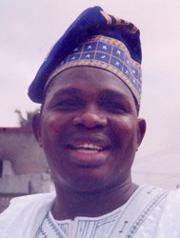
Alao Adedayo-Founder/savior of Yoruba Language
thru his GREAT newspaper Alaroye! Do Your own part and BUY it every
week, get your children to read it- FIGHT TO SAVE Yoruba Language. FROM
DYING!
July 8, 2011
Musa Alao Adedayo, a.k.a Agbedegbeyo, is the Publisher/Chief Executive Officer, World Information Agents Limited, the publishing company of the popular Yoruba newspaper, ALAROYE. He spoke to BASHIR ADEFAKA about himself and how he stumbled four times to get it right with the vernacular paper that has today become a success story in the newspaper industry in Nigeria. Excerpt
How did you start out in life?
I am a Muslim but I am not a biased person because God Himself never loved a biased person. But those who know me from the beginning used to call me Alao Agbedegbeyo. When I talk of people who know me from the beginning, they are people from the 70s, early 80s and so on.
I came from Abeokuta to Lagos in 1980 doing Ewi (lyrics) artist. In those days as an Ewi person, you must be attached to a particular musician and I was with Dele Abiodun, who was like my master. Ewi was like side-attraction at a show and it would come on stage while the musician and his band members were taking a rest.
I had also participated in some dramas through the likes of Jide Kosoko, Ishola Ogunsola, (Dr. I. Show Pepper) and Adebayo Salami (Oga Bello). It was because of the Ewi that I used to present in those days that Jide Kosoko would always come to Dele Abiodun’s shows. He would say to me, “Alao, we are having an outing somewhere and I want you to perform your Ewi there,” and I would say no problem.
How did Ewi correlated with the broadcaster that you were?
By and large as God would have it, through that channel, as I have mentioned before, I became a broadcaster. Sometime in 1979, Radio Lagos started a programme called, Kebuyeri, which was mainly for the Awada Kerikeri group that was then run by Adebayo Salami popularly called Oga Bello. We went to a show at Ebute Metta and Adebayo Salami and his group members had also come to that show.
It was there he saw me and said, “Ah, Alao! Radio Lagos has just given us a programme and we want you to be in it” and I said no problem. We didn’t even discuss money because what was more important to us at that time was the job. That was how we started the programme and it became overwhelmingly popular turning me into a celebrity.
Behind that programme, a plan was going on by the management of Radio Lagos and the producer of the programme, Adebayo Tijani, communicated to me that management was talking about me and that was how I became a newscaster with Radio Lagos reading Yoruba news at that time.
I left Radio Lagos in 1981, which was a real year of politicking in the country. Then, Radio Nigeria Ikeja which was established within that time was located in Ikoyi and in fact when we were there, we were always abusing and calling them, “Agberekusu f’ohun Ikeja” that is, people who were on the Island claiming to be speaking from Ikeja (laughs). I eventually found myself at the Radio Nigeria Ikeja and later NTA but I did not stay long before I left.
When you left service, where did you go?
When we joined broadcasting, most of us did not get the job because of our educational qualifications and so, when I left the NTA, it was an opportunity for me to now go and improve myself, which then took me to the Nigerian Institute of Journalism (NIJ) and then the universities for my first and later second degrees.
How did Alaroye come into the show?
It was in May 1985 when I was 25 and while I was still working as a Yoruba newsreader with the NTA that I decided to try my hands in publishing, which brought about the Alaroye. Between May and October of 1985, I was only able to publish four editions of the tabloid that was meant to be weekly. I was doing it alone because I had no such money to hire people. It thus became a staggered publication because it was a one-man’s idea and as a result, no prospective partner was willing to support or invest in the business. It was also like that because Yoruba newspaper business at that time was seen as a barren land. So, naturally, it died.
Further effort was made at resuscitating the paper in 1990 but it couldn’t get to the vendors, though it was being published. It was to be launched that year so that some funds could be raised. On the day of the launching, a prominent member of the community who was a friend of both the chief launcher and chairman, Lai Balogun, died. So it was a wrong day for the Alaroye’s show as the whole community was thrown into mourning and no one remembered the launch.
In 1994 when I made the third attempt at the publication, I was convinced that Alaroye would one day emerge a success story because, for four weeks, I was able to publish the weekly paper consecutively and throughtout the period, it was well circulated and generally accepted.
And because I had acquired more knowledge about all it required to make a successful print media, Alaroye was able to stand and able to meet the standard of a newspaper. Yet, it couldn’t go far because I could not raise the required fund to keep it going. And for two years, it remained like that until July 2, 1996, when we were able to revisit it and tried our best to make it what it is today. That was the fourth attempt and it has now come to stay.
I thank God that today, Alaroye is seen not as a happenstance, but a planned revolution in the newspaper industry in Nigeria. And it is so because, no Yoruba newspaper has been so successful because most of the earlier issues, people have said, were translataion of English newspapers or repetition of news items already carried on radio and television.
Alaroye is original for its thorough analysis, research works and investigative journalism that many have appreciated as having put the newspaper on a very high pedestal. It informs, educates, entertains and analyses events as they unfold through the Yoruba culture. For this, it circulates in Nigeria, wherever Yoruba domicile, with the print run sometimes as high as 150,000 copies per week. I have the reason to really thank God today because, in Nigeria, particularly among the Yorubas, Alaroye is a language. It is the culture.
The Conference of Yoruba Leaders showcased by your newspaper, which debuted in 2002, hasn’t seemed to produce any result considering the fact that Yorubas are still intolerably disunited. What is the problem?
The problem we have in Yorubaland is the way we play our own politics. What Alaroye is trying to do is to serve as a bridge to bring all the leaders together. There is need for a connecting point, which will connect all Yoruba people with one another. We have very, very intelligent, well exposed and highly patriotic sons and daughters of Yorubaland. We cannot run away from the fact that we are Yorubas; we had been Yoruba people before Nigeria and we will remain Yoruba people within Nigeria.
Yes, political party differences are there but we should be able to know that there is difference between politics and governance. So, during election, you can abuse and criticize yourselves but once election is over, issue of governance becomes the central point while politicking is set aside for another election season. And if you are the governor, you should see yourself as the father of all, as the head of government and people should see the governor beyond his party but as the leader that all of us should relate well with as one of our own.
In the year 2002, I went to Papa Abraham Adesanya and I said to him, “E ma bawon se oselu. Ema bawon da si oro oselu. Asiwaju Yoruba ni ki’e je” (That Papa should not be part of politics other Yorubas played but that he should be okay with himself as Leader of the Yoruba Nation).
He asked me why. We talked a lot about it and he agreed with me. Not only that I went to discuss it with him, we made it a critical editorial issue, which some of the Afenifere members then responded to.

[
Leave a Reply
Wednesday, March 30, 2011
ALAGBA ADEBAYO FALETI ON WHY HIS "FILA" THE WAY HE DOES!

The man with the cap ‘It’s easy for me to just bend it anyhow’
Font size: YEMISI ADENIRAN 19/03/2011 00:26:00
Not many people know why Adebayo Faleti wears his Fila (cap) the way he does.The 73 yearold actor and culture icon shared the secret behind his unusual style with YEMISI ADENIRAN
what informs your peculiar way of donning your cap?
Nothing, I do not know how to style it and with it sewn this long, it is easier for me to just bend it anyhow.
Where did you grow up and what fond memories of your childhood do you have?
I grew up in the village and you can imagine how much fun that was. It was much excitement that many children of today are not likely to understand for obvious reasons. I was the first born of my father, so, I had all the attention from them. He would endeavour to put me through all the necessary training and exposure within his power and jurisdiction to make me a proper child and it was all interesting. I was allowed to be part of all the pranks that children engaged in and my ‘sins’ were gladly forgiven. There were rivers to swim in, forests to hunt in, drums to beat and many other beautiful things to remember. There were those wonderful days of moonlight tales when we listened to legendary and thrilling stories that are related to issues of life. It was all fun. My father, for instance, made me to read Yoruba texts and story books to his hearing every evening, this way, I managed to get well trained. He was committed to anything that would make me successful in life. I honestly owe my success to his tolerance.
What were the circumstances of your birth?
Were you born with a silver spoon in your mouth?
I grew up in the village and you can imagine how much fun that was. It was much excitement that many children of today are not likely to understand for obvious reasons. I was the first born of my father, so, I had all the attention from them. He would endeavour to put me through all the necessary training and exposure within his power and jurisdiction to make me a proper child and it was all interesting. I was allowed to be part of all the pranks that children engaged in and my ‘sins’ were gladly forgiven. There were rivers to swim in, forests to hunt in, drums to beat and many other beautiful things to remember. There were those wonderful days of moonlight tales when we listened to legendary and thrilling stories that are related to issues of life. It was all fun. My father, for instance, made me to read Yoruba texts and story books to his hearing every evening, this way, I managed to get well trained. He was committed to anything that would make me successful in life. I honestly owe my success to his tolerance.

Let’s talk about your love life. What was it like and when did you get married?
I’m an African man and in those days, our styles were different from the way you people do it these days. We weren’t careless and were straight forward than you people. I did not marry early, I think I got married at the age of 30 or so and that was some 10 years after my peers. My mother was worried but like I said, my father was supportive and more tolerant. And you really can’t blame her, she was acting normally; she wanted to be sure that all was well with me. I had almost everything late; education and marriage, but we thank God all has ended well.
Are you a polygamist?
No, I am not. I am married to just one woman. I live with one wife at a time. But really, I would have loved to be a polygamist.
Why?
It is the best way to manage women. You know, it is only one woman that can inflict any punishment on a man. If they are two, it is not possible. You will simply boycott her room and go to the other. By the time you go to her afterwards, she will receive you with open arms.
But they can gang up against you?
That is not possible. I would not have permitted unity or friendliness between them. I would have made sure they were poles apart and this would disallow them from conspiring against me. The best way is to make them enemies and you will enjoy yourself. I really want to work on a movie that talks about true friendship, true love. The movie will dwell on the recipe for a good marriage which will be based on true friendship. Couples to be should be true friends who are ready to bear each other’s burden. It is good to have your friend as your wife or husband. Friendship should precede everything. That is why the olden days’ marriages lasted longer. The courtship was usually long enough and that availed them enough space to study and know each other well.
Friday, March 25, 2011
MORE YORUBA GREETINGS # 2
FROM yeyeolade.wordpress.com
BLACK IS BEAUTIFUL!
DEDICATED TO SAVING BLACKNESS WORLDWIDE!
MORE YORUBA GREETINGS #2
By Yeye Akilimali Funua Olade Greetings: Various sentences used in Yoruba
English Yoruba
Greetings: Good Morning
reply: Good Morning/morning
Ekaaro/Ekuojomo
Ekaaro?Ekuojomo (O)
How are you?
Fine, thank you/I’m fine Se daadaa ni/Salaafia ni?
Adupe
Greeting Good afternon
Reply: Good afternoon Ekaasan
Ekaasan(O)
How are you?
Fine, thank you. Salaafia ni/Sedaadaa ni?
Adupe
Greeting: Good Evening
Reply: Good evening Ekuirole (Ekaale from 7pm)
Ekuirole (O) (Ekaale o) Ina wuni
How are you?
Fine, thank you. Se daadaa ni/Salaafia ni?
Adupe
Greeting: Goodnight
Reply: Goodnight Odaaro
Odaro (O)
Ka obo o
Have a nice sleep Orun n re lao sun
My friend Ore mi
How is Work? Bawo nise/ise n ko?
How is family? Awon ebi n ko?
How is wife? Iyawo re n ko?
How is husband? Oko re n ko?
How is everything? Bawo ni n nkan?
Come and eat Wa jeun
Thanks you. Ese/Aagbabire
English Yoruba
Greetings: Good Morning
reply: Good Morning/morning
Ekaaro/Ekuojomo
Ekaaro?Ekuojomo (O)
How are you?
Fine, thank you/I’m fine Se daadaa ni/Salaafia ni?
Adupe
Greeting Good afternon
Reply: Good afternoon Ekaasan
Ekaasan(O)
How are you?
Fine, thank you. Salaafia ni/Sedaadaa ni?
Adupe
Greeting: Good Evening
Reply: Good evening Ekuirole (Ekaale from 7pm)
Ekuirole (O) (Ekaale o) Ina wuni
How are you?
Fine, thank you. Se daadaa ni/Salaafia ni?
Adupe
Greeting: Goodnight
Reply: Goodnight Odaaro
Odaro (O)
Ka obo o
Have a nice sleep Orun n re lao sun
My friend Ore mi
How is Work? Bawo nise/ise n ko?
How is family? Awon ebi n ko?
How is wife? Iyawo re n ko?
How is husband? Oko re n ko?
How is everything? Bawo ni n nkan?
Come and eat Wa jeun
Thanks you. Ese/Aagbabire
Be the first to like this post.
6 Responses to “MORE YORUBA GREETINGS #2”
YORUBA WORLD- HELP SAVE YORUBA LANGUAGE!
http://groups.yahoo.com/group/yorubaworld/message/3136

yorubaworld · Yoruba World Information Service
Yahoo! Groups TipsDid you know...Message search is now enhanced, find messages faster. Take it for a spin. |
SPONSOR RESULTSHelp For Parents www.Care.com/Do NOT Buy Car Insurance! www.news9consumer.B.S in IT Engineering www.tuauniversity. | ||||||||||||||||||||||||||||||


 Offline
 Send Email

| Copyright © 2011 Yahoo! Inc. All rights reserved. Privacy Policy - Terms of Service - Copyright Policy - Guidelines - Help |
Thursday, March 3, 2011
OMOWE TUNDE ADEGBOLA IS SAVING YORUBA LANGUAGE!
FROM yeyeolade.blogspot.com

Wednesday April 2, 2003
Microsoft to Deliver Windows, Office in Major Nigerian Languages
Microsoft has announced that it will deliver Language Interface Packs that will soon make Microsoft Windows and Microsoft Office packages more locally-relevant and easier to understand for Nigerian end users in commemoration of the International Mother Language Day in Nigeria.
The disclosure was made when Jummai Umar-Ajijola, citizenship manager for Microsoft Nigeria led a team of Microsoft partners to make a presentation to the Chairman, Education Committee, House of Representatives, and Honourable Faruk Lawan in Abuja. The visit which also included a visit to the Federal Ministry of Education was part of the activities to mark the Mother Language Day, where the team was received by Alhaji Bello Ozigis, Permanent Secretary at the Federal Ministry of Education on behalf of Hajiya Aisha Dukku Minister of State for Education.
Microsoft is working closely with the Linguistic Association of Nigeria and other advocates to complete work on the Language Interface Packs for the Igbo, Hausa and Yoruba languages, which will be compatible with Microsoft Windows Vista and Microsoft Office Word.
Hajiya Aisha, Honourable Minister of State for Education, is currently one of the championing forces behind the language program and presented the Igbo, Hausa and Yoruba glossaries to stakeholders in Abuja last December.
According to Dr. Tunde Adegbola of Alt-i, who is the moderator of the localisation process in Nigeria, the Windows Interface Packs are on track to be released this May, and the Office Interface Packs are scheduled for release later in October.
Honourable Lawan while speaking at the day’s festivities on behalf of the Honourable Speaker, House of Representatives, commended Microsoft for the continued efforts to grow a strong local IT industry and ensure that every citizen has fair and meaningful access to locally-relevant technology.
“Functional education and specialized training are the pre-requisites for a productive workforce, and good leaders. It is the only way to create a populace that is successful in all spheres of human life. All these cannot be achieved without understanding. This is the critical role that language plays. We are therefore committed to ensuring that everyone has access to functional education in language familiar to them. We commend Microsoft for the great initiative to bring technology to everyone through the Local Language Program,” Honourable Lawan said.
Microsoft's Citizenship Lead for Nigeria, Jummai Umar-Ajijola added that governments around the world are facing a great challenge in today's global economy - the need to quickly build a strong economy that can effectively participate in an increasingly-interconnected world.
“In an environment as diverse as Nigeria - with over 500 ethnic languages - the need to eliminate the language barrier around technology education is critical to the success of the efforts to bridge the digital divide.
“It is in the light of this need that Microsoft developed the Local Language Program to provide the tools and technologies required to develop, enhance, and expand local IT economies and to enable language groups of all sizes to participate in this growth,” she said.
Articles 13 and 15 of the International Covenant on Economic, Social and Cultural Rights Declare that all persons have the right to express themselves and to create and disseminate their work in the language of their choice, and particularly in their mother tongue.
According to Mr Koïchiro Matsuura, director-general of UNESCO, “Languages do indeed matter in attaining the Millennium Development Goals (MDG), which the United Nations agreed upon in 2000.
“They matter when we want to promote cultural diversity, and fight illiteracy, and they matter for quality education, including teaching in the mother language in the first years of schooling. They matter in the fight for greater social inclusion, for creativity, economic development and safeguarding indigenous knowledge.”
“We are very excited about the potential that Microsoft’s Local Language Program has for driving technology penetration in Nigeria,” Dr Adegbola added.
“This is a further demonstration of the company’s commitment to supporting the reform agenda of the present administration by transforming education and creating opportunities for local innovation. We are also delighted to be a part of this great project,” he said.
5%%%%%%%%%%%%%%%%%%%%%%%%%%%%%%%%%%%%%%%%%%%%%%%%%%%%%%FROM nairaland.com
Microsoft has completed work on glossaries for the Hausa, Igbo and Yoruba translations of Microsoft Windows Vista and Microsoft Office 2007.
By this, Microsoft Windows and the four applications in Microsoft Office 2007- Excel, Word, Powerpoint and Access, can easily be adapted to versions in the three languages.
The firm said a Language Interface Pack that would allow the applications to fully be available in the three languages was in the works and would be delivered in the coming months.
The Supervising Minister of Education, Hajiya Aishatu Dukku, presented the glossaries to stakeholders in Abuja on Wednesday, a development that Microsoft noted was one more landmark in its Local Language Program in Nigeria.
Currently, the LLP scheme is working on 101 languages in the world and five in the West Africa.
According to the Country Manager, Microsoft Nigeria, Mr. Emmanuel Onyeje, the LLP is Microsoft's response to the need to provide people of all regions, cultures and languages, with access to technology in a language that is familiar and which honours their cultural distinctions.
He said, "Learning a second language should not be a prerequisite for using technology. That is why we are working with governments and language authorities to translate our software and extend it to a broader set of users.
"Through the Local Language Program, we are giving our local communities the tools and resources they need to bridge the digital divide and create opportunities for economic advancement."
At the presentation of the moderator of the localisation process in Nigeria, Dr. Tunde Adegbola of the African Languages Technology Institute, explained that the glossary and LIP would equip local information technology communities with the basic tools to create customised language solutions that promote economic growth and preserve local languages.
Developed from the glossary, the LIP is the application that connects the local language to the computer, through a native language desktop user interface.
When the process is completed, the LIP will be freely downloadable from the LLP website.
Local solutions can be developed on top of the LIPs, enabling the creation of localised products that enhance the value of each LIP and ensure the successful use of technology.
Adegbola urged the stakeholders to study the glossary, which was developed in collaboration with governments, universities, and language authorities to ensure that the standard technical terminologies had been translated correctly into the local languages.
The Minister of Education, Hajiya Aishatu Dukku, commended Microsoft for the initiative to eliminate the language barrier, which presented a serious challenge for teaching and learning technology at the grassroots.
She further outlined the national policy on education, which recognised the language of the environment as the first language of instruction for the first three years of education with English only taught as a subject.
From the fourth year, English language becomes the language of instruction, while the language of the environment and French are taught as subjects.
She said that with the LLP, teaching technology would be much easier.
The minister said, "There are so many skills we may not be able to transfer except in our local languages. This initiative by Microsoft is a first step for us to start thinking of how we can develop our languages further in order to grow our IT capacity."
By eliminating the language barrier to technology education through the local language programme, Microsoft believes that many more people will be encouraged to use desktop software in Nigeria's local communities, improving access to technology.
This will create new economic opportunities, and enriching people's personal lives. The move will go a long way to bridging the digital divide between the developed and developing communities around the world.
It is expected that the Hausa, Igbo and Yoruba language stakeholder groups will review the glossary and work with Microsoft to produce the final copy to move the LLP to the NEXT level.&&&&&&&&&&&&&&&&&&&&&&&&&&&&&&&&&&&&&&&&&&&&&&&&&&&&&&&&&&&&&&&&&&&&&&&&&&&&&&&&&&
FROM DAILYTRUST.COM
Microsoft Nigeria has launched a language interface pack for Windows Vista in three major Nigerian languages; Hausa, Yoruba and Igbo as part of its Local Language Programme (LLP).
Thursday, March 03, 2011
SAVING YORUBA LANGUAGE-OMOWE TUNDE ADEGBOLA IS IN THE FOREFRONT OF FIGHTING TO SAVE YORUBA LANGUAGE-HERE HE DEVELOPED MICROSOFT SOFTWARE FOR YORUBA,IGBO AND HAUSA!
Wednesday April 2, 2003
Microsoft to Deliver Windows, Office in Major Nigerian Languages
Microsoft has announced that it will deliver Language Interface Packs that will soon make Microsoft Windows and Microsoft Office packages more locally-relevant and easier to understand for Nigerian end users in commemoration of the International Mother Language Day in Nigeria.
The disclosure was made when Jummai Umar-Ajijola, citizenship manager for Microsoft Nigeria led a team of Microsoft partners to make a presentation to the Chairman, Education Committee, House of Representatives, and Honourable Faruk Lawan in Abuja. The visit which also included a visit to the Federal Ministry of Education was part of the activities to mark the Mother Language Day, where the team was received by Alhaji Bello Ozigis, Permanent Secretary at the Federal Ministry of Education on behalf of Hajiya Aisha Dukku Minister of State for Education.
Microsoft is working closely with the Linguistic Association of Nigeria and other advocates to complete work on the Language Interface Packs for the Igbo, Hausa and Yoruba languages, which will be compatible with Microsoft Windows Vista and Microsoft Office Word.
Hajiya Aisha, Honourable Minister of State for Education, is currently one of the championing forces behind the language program and presented the Igbo, Hausa and Yoruba glossaries to stakeholders in Abuja last December.
According to Dr. Tunde Adegbola of Alt-i, who is the moderator of the localisation process in Nigeria, the Windows Interface Packs are on track to be released this May, and the Office Interface Packs are scheduled for release later in October.
Honourable Lawan while speaking at the day’s festivities on behalf of the Honourable Speaker, House of Representatives, commended Microsoft for the continued efforts to grow a strong local IT industry and ensure that every citizen has fair and meaningful access to locally-relevant technology.
“Functional education and specialized training are the pre-requisites for a productive workforce, and good leaders. It is the only way to create a populace that is successful in all spheres of human life. All these cannot be achieved without understanding. This is the critical role that language plays. We are therefore committed to ensuring that everyone has access to functional education in language familiar to them. We commend Microsoft for the great initiative to bring technology to everyone through the Local Language Program,” Honourable Lawan said.
Microsoft's Citizenship Lead for Nigeria, Jummai Umar-Ajijola added that governments around the world are facing a great challenge in today's global economy - the need to quickly build a strong economy that can effectively participate in an increasingly-interconnected world.
“In an environment as diverse as Nigeria - with over 500 ethnic languages - the need to eliminate the language barrier around technology education is critical to the success of the efforts to bridge the digital divide.
“It is in the light of this need that Microsoft developed the Local Language Program to provide the tools and technologies required to develop, enhance, and expand local IT economies and to enable language groups of all sizes to participate in this growth,” she said.
Articles 13 and 15 of the International Covenant on Economic, Social and Cultural Rights Declare that all persons have the right to express themselves and to create and disseminate their work in the language of their choice, and particularly in their mother tongue.
According to Mr Koïchiro Matsuura, director-general of UNESCO, “Languages do indeed matter in attaining the Millennium Development Goals (MDG), which the United Nations agreed upon in 2000.
“They matter when we want to promote cultural diversity, and fight illiteracy, and they matter for quality education, including teaching in the mother language in the first years of schooling. They matter in the fight for greater social inclusion, for creativity, economic development and safeguarding indigenous knowledge.”
“We are very excited about the potential that Microsoft’s Local Language Program has for driving technology penetration in Nigeria,” Dr Adegbola added.
“This is a further demonstration of the company’s commitment to supporting the reform agenda of the present administration by transforming education and creating opportunities for local innovation. We are also delighted to be a part of this great project,” he said.
5%%%%%%%%%%%%%%%%%%%%%%%%%%%%%%%%%%%%%%%%%%%%%%%%%%%%%%FROM nairaland.com
Microsoft has completed work on glossaries for the Hausa, Igbo and Yoruba translations of Microsoft Windows Vista and Microsoft Office 2007.
By this, Microsoft Windows and the four applications in Microsoft Office 2007- Excel, Word, Powerpoint and Access, can easily be adapted to versions in the three languages.
The firm said a Language Interface Pack that would allow the applications to fully be available in the three languages was in the works and would be delivered in the coming months.
The Supervising Minister of Education, Hajiya Aishatu Dukku, presented the glossaries to stakeholders in Abuja on Wednesday, a development that Microsoft noted was one more landmark in its Local Language Program in Nigeria.
Currently, the LLP scheme is working on 101 languages in the world and five in the West Africa.
According to the Country Manager, Microsoft Nigeria, Mr. Emmanuel Onyeje, the LLP is Microsoft's response to the need to provide people of all regions, cultures and languages, with access to technology in a language that is familiar and which honours their cultural distinctions.
He said, "Learning a second language should not be a prerequisite for using technology. That is why we are working with governments and language authorities to translate our software and extend it to a broader set of users.
"Through the Local Language Program, we are giving our local communities the tools and resources they need to bridge the digital divide and create opportunities for economic advancement."
At the presentation of the moderator of the localisation process in Nigeria, Dr. Tunde Adegbola of the African Languages Technology Institute, explained that the glossary and LIP would equip local information technology communities with the basic tools to create customised language solutions that promote economic growth and preserve local languages.
Developed from the glossary, the LIP is the application that connects the local language to the computer, through a native language desktop user interface.
When the process is completed, the LIP will be freely downloadable from the LLP website.
Local solutions can be developed on top of the LIPs, enabling the creation of localised products that enhance the value of each LIP and ensure the successful use of technology.
Adegbola urged the stakeholders to study the glossary, which was developed in collaboration with governments, universities, and language authorities to ensure that the standard technical terminologies had been translated correctly into the local languages.
The Minister of Education, Hajiya Aishatu Dukku, commended Microsoft for the initiative to eliminate the language barrier, which presented a serious challenge for teaching and learning technology at the grassroots.
She further outlined the national policy on education, which recognised the language of the environment as the first language of instruction for the first three years of education with English only taught as a subject.
From the fourth year, English language becomes the language of instruction, while the language of the environment and French are taught as subjects.
She said that with the LLP, teaching technology would be much easier.
The minister said, "There are so many skills we may not be able to transfer except in our local languages. This initiative by Microsoft is a first step for us to start thinking of how we can develop our languages further in order to grow our IT capacity."
By eliminating the language barrier to technology education through the local language programme, Microsoft believes that many more people will be encouraged to use desktop software in Nigeria's local communities, improving access to technology.
This will create new economic opportunities, and enriching people's personal lives. The move will go a long way to bridging the digital divide between the developed and developing communities around the world.
It is expected that the Hausa, Igbo and Yoruba language stakeholder groups will review the glossary and work with Microsoft to produce the final copy to move the LLP to the NEXT level.&&&&&&&&&&&&&&&&&&&&&&&&&&&&&&&&&&&&&&&&&&&&&&&&&&&&&&&&&&&&&&&&&&&&&&&&&&&&&&&&&&
FROM DAILYTRUST.COM
Microsoft launches Hausa, Yoruba, Igbo Vista
Launching the pack tagged, “LLP GO-live,” President Umaru Yar’adua who was represented by the Minister of Science and Technology, Dr Alhassan Bako Zaku said the event is a turning point in the history of technology in the country. He said, “The initiative is a long awaited vehicle to take the benefits of Information Communication Technology (ICT) to the people at the grassroots in every nook and corner of the country. We truly believe that this will make IT solutions more accessible to the Nigerian community. It also represents a breakthrough for Nigerian linguistic and literary studies.”
He called on the people to take advantage of the huge opportunity of the language software to preserve and promote our mother languages while benefiting from continuing IT advancements.
Speaking, the General Manager for Microsoft Anglophone West Africa, Mr. Emmanuel Onyeje said the LLP has created a platform for Nigerians to embrace the now localized process to ensure that more of our over 500 indigenous languages are preserved by translating technology into them.
He said the translation of Microsoft Office in the three languages will be available later this year adding that when it becomes available, it will mean that Nigerians can access the productivity applications including Microsoft Office Word, Excel and PowerPoint in familiar languages.
He said, “Indeed this is a momentous event for our nation. With the availability of the Igbo, Hausa and Yoruba languages interface packs for Microsoft Windows Vista and the Microsoft Office 2007 to come later this year, we finally have a platform that allows a higher critical mass of Nigerian access to technology.”
He explained that the language interface software packs were created by Nigerians (their partners) living in the country.
“We need to move from being consumers to developers. We ensured that this process was localized. The tools are freely available for us to embrace and celebrate our diversity .
Others can now take these tools and develop new applications based on the existing platform,” he said.
Also speaking, Dr. Tunde Adegbola, of African Languages Technology Initiative, said any language that does not provide the tool for intergenerational communication is set to die adding that with the LLP, we are at least assured that the Igbo, Hausa and Yoruba languages will survive the next generation.
He said, “The diversity of languages spoken in Nigeria is a key element of our collective identity and is vital that we preserve these traditions while simultaneously equipping our citizens for success in the 21st century.”
Subscribe to:
Posts (Atom)


 Posts
Posts


July 19, 2008 at 12:50 am | edit Dear Sir/Madam,
Kindly enlightene me: On what occasions does one use the greeting expression – E ku eti’gbo? Is it for good news or for bad news? e.g. can we greet someone who has just received a bad news about a loved one with the expression: E ku eti igbo?
A relative told me that we use ‘E ku eti’gbo’ only for good news, e.g. news of success. Please advise.
Thank you,
Jide
July 25, 2008 at 1:54 pm | edit Brother Jide Sadiku, ore mi(my friend )tells me that it is used only for BAD news. Don’t be surprised if certain Yorubas conflict on what a term or how a word is used because there are many dialects involved so ..now this ore is from Oyo,and speaks the core Yoruba that standard Yoruba comes from so evidently originally this expression was used only to break bad news. So any Yoruba who says otherwise either has limited knowledge of Yoruba or in his dialect they have a different use.
September 24, 2008 at 8:55 am | edit Dear sir,the expression “e kuetigbo can be used both ways,either for badnews or goodnews
February 1, 2010 at 11:40 pm | edit Yoruba is beautiful! Got A1 in WAEC so proud
February 2, 2010 at 4:27 pm | edit fromAfricaWeCame we are the most proud of you! CONTINUE TO SAVE YORUBA BY NOT MIXING IT WITH ENGLISH AND DESTROYING IT! OMO YORUBA DAADAA! OLUWA A BUKUN YIN O! ASE!E TOJU EDE YORUBA DAADAA!
April 30, 2010 at 2:29 pm | edit Hello,
please I need some help I am in search for the Youruba name ör meaning word for Ubuntu zulu philosophy can you help?